Solitaire - 2026
Standard PuzzleCard
4.7634.00 Reviews
- Version
- 1.958
- Installs
- 1.00M
- Age Rating
- Everyone
Screenshots
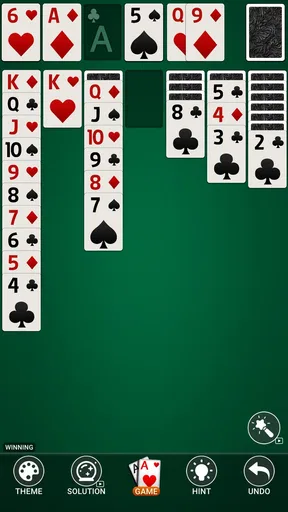
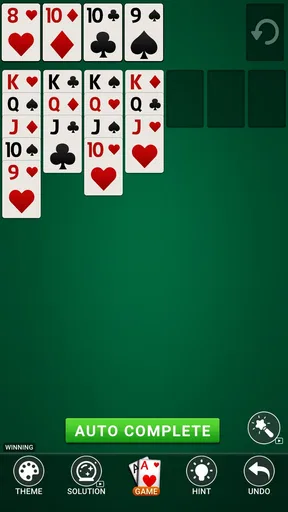
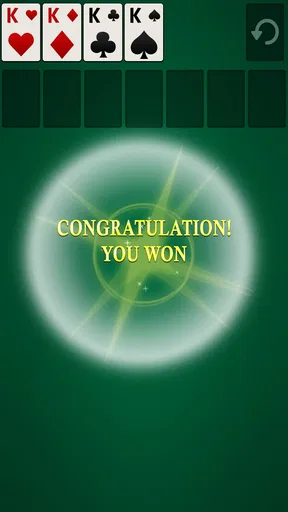
Our Review of Solitaire - 2026
 Analysis by Appyee
I spent time with Solitaire as a straightforward card game for Android, and its appeal became clear almost immediately: it gives the familiar patience experience a quiet, low-pressure home on a phone. It is developed by Standard Puzzle, belongs to the card-game category, and is free to install. That combination makes it easy to try without turning the decision into a purchase commitment.
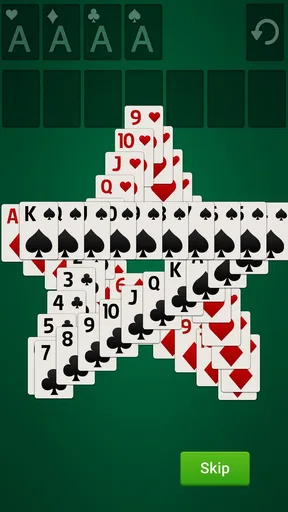
This is the kind of game I reach for when I have a few spare minutes rather than an hour to invest in a large adventure. A short round fits naturally into a coffee break, a commute, or the few minutes before going to bed. The central experience is classic Klondike solitaire, so the rules are recognizable even if you have not played in years. The presentation also uses the “garden” idea in its identity, giving the traditional format a softer, more relaxed personality.
How the free solitaire experience feels in everyday use
I find the appeal of a free solitaire game depends on more than its price: it needs to be easy to return to, readable in the moment, and comfortable to use in short bursts. This section looks at how that everyday experience can suit different needs and settings, before considering where the familiar format may still create barriers.
A familiar starting point with little learning overhead
The biggest strength here is accessibility. You do not need to learn a new card system, build a deck, understand a complicated campaign, or remember a long tutorial. The basic objective is the same one many people associate with classic computer solitaire: arrange cards by suit and sequence while uncovering the hidden layout. I found that familiarity more valuable than it may sound, because it lets me begin playing almost instantly.
That simplicity also makes the game suitable for different ages. Its content rating is Everyone, which matches the calm, nonviolent nature of the experience. I would be comfortable suggesting it to someone who wants a gentle puzzle rather than a competitive multiplayer game, a reflex challenge, or a story-heavy distraction.
The game was released on May 23, 2023, and its current version is 1.958. On Android, it requires at least OS 9, so the practical question is less about performance ambition and more about whether the device meets that basic software requirement. On a compatible phone, this is the sort of title that should feel approachable because its demands come from thinking through cards, not mastering complicated controls.
Why the card layout remains satisfying
Solitaire works best when each move gives me a small decision to weigh. Should I expose a hidden card now, preserve a useful sequence, or move a lower card to create space? Those choices are modest, but they create a pleasant rhythm. The game does not need a dramatic story to hold attention; the changing arrangement of the cards supplies enough variety for short sessions.
One useful habit is to avoid moving a visible card simply because the move is legal. I get better results when I first ask whether the move reveals a hidden card, opens a column, or protects a sequence that may be needed later. This is especially important in Klondike, where a move that looks productive can reduce future options. The app is at its most enjoyable when I treat each round as a small planning exercise rather than tapping randomly until something works.
Another practical approach is to prioritize uncovering face-down cards over building attractive-looking stacks. A neat sequence is not always the most valuable sequence. If moving a card exposes another card underneath, that usually gives me more information and more possible routes. This is a small strategic distinction, but it is one of the reasons the game can remain engaging after the novelty of the familiar rules has worn off.
What free access means here
The verified price is free, so I can evaluate it as an accessible, no-cost card game rather than a paid premium purchase. That matters for this genre because many people only want a quick solitaire option and do not want to spend money before knowing whether the layout, controls, and overall feel suit them. The free entry point removes that initial barrier.
At the same time, free access should not be confused with a guaranteed premium-style experience. A free game may be a good fit for casual use without replacing a paid, highly polished solitaire product for someone who wants a completely controlled environment. I would therefore judge this app by the convenience and entertainment it provides at no purchase cost, not by expectations borrowed from expensive desktop software.
The app has attracted over a million installs, with an average rating of 4.7 from roughly fifteen thousand ratings. Those figures suggest that the basic proposition works for a substantial audience, although they do not tell me whether every player will prefer its particular presentation or session flow. I still recommend trying a few rounds personally, because solitaire preferences can be surprisingly specific: some players care about card size, some about speed, and others about the exact way a game handles a difficult layout.
Small decisions that improve the experience
I found three habits particularly useful. First, I pause before sending cards to the foundation. Building upward is usually the goal, but moving a card too early can remove flexibility from the tableau. Keeping a card available for a temporary sequence can be more helpful than immediately placing it where it appears to belong.
Second, I use short sessions deliberately. Playing one or two rounds keeps the game relaxing; continuing while distracted can turn a simple puzzle into repetitive tapping. This is a good example of where the app’s value depends on how it is used. It is strongest as a calm mental break, not necessarily as an all-day commitment.
Third, I use the game as a concentration reset. When I am switching between demanding tasks, a round of solitaire gives me a bounded activity with clear rules and a definite ending. I would not call it a productivity tool, but it can be a better break than endlessly scrolling because it asks me to make decisions without demanding a large time investment.
Where the value is strongest
The value comes from convenience, familiarity, and repeatability. A physical deck requires space and setup, while a desktop version is less convenient when I am away from a computer. This mobile format places the same basic pastime in a pocket-sized form. For someone who already enjoys Klondike, that may be enough to justify keeping it installed.
Compared with a more elaborate card-game alternative, this experience is easier to understand and less demanding of attention. A collectible card game may offer deeper deck construction, progression, or competition, but it also asks the player to learn systems and possibly manage a larger time commitment. This app is better when I want the puzzle itself, not an ecosystem around the puzzle.
It also compares favorably with playing solitaire through a browser when convenience matters. A dedicated app feels more immediate, and I do not have to navigate through unrelated page content before starting a round. However, a browser-based option may suit someone who does not want another installed game or who prefers using a larger screen. The better choice depends on whether instant mobile access is more important than keeping the device minimal.
The tradeoffs I noticed
The same simplicity that makes the game approachable can limit its appeal. If you want a strong narrative, animated progression, competitive rankings, or a complex deck-building layer, this is probably not the right destination. Classic solitaire has a narrow core, and no amount of familiarity changes that. I enjoyed its focused nature, but I can also see experienced players wanting more variety after repeated sessions.
There is also a difference between relaxing and effortless. Solitaire is easy to learn, but good play still requires attention. A poor move can leave a layout harder to solve, and a player who taps without considering the next few possibilities may find the experience frustrating. I see that as a natural part of the card puzzle rather than a flaw, although it means the app is not ideal when I want something completely passive.
Another tradeoff concerns expectations around free games. The app costs nothing to access, which is its clearest financial advantage, but readers who specifically want a paid, distraction-free product should compare the overall experience with premium solitaire choices before settling permanently. I would not assume that “free” automatically means “best value” for every player; it means the risk of trying it is low.
For people with older phones, compatibility is worth checking because the minimum operating-system requirement is Android 9. That is not an unusual requirement, but it can matter if the game is being considered for an older spare device. Someone using an iPhone should also make sure they are looking at the appropriate platform version before planning around it, since the confirmed technical requirement here is stated for Android.
Who will get the most from it
I think this is a strong match for three kinds of players. The first is someone returning to solitaire after years away and wanting the classic rules without a steep learning curve. The second is a casual mobile gamer who prefers quiet puzzles to action or competition. The third is a person who wants a free card game for short, repeatable sessions and does not need a large progression system to stay interested.
It can also work well for families looking for an Everyone-rated pastime that is easy to explain. The game does not require a group, though, so it is better described as an individual relaxation tool than a social activity. If your main goal is playing against friends, exchanging cards, or communicating during matches, a multiplayer card app would be more appropriate.
I would suggest skipping it if your priority is advanced solitaire control, a very specific ruleset, or a large collection of distinct card variants. The store summary identifies the experience around classic solitaire, Klondike patience, and the garden theme, so I approach it as a focused version of that format rather than a broad card-game library. Players who need extensive customization should choose a product whose main purpose is offering many modes and settings.
Questions I would ask before installing
“Is it genuinely free to start?” Yes. The listed price is free, so there is no purchase required simply to try the game. That makes it suitable for a quick test: install it, play several rounds, and decide whether the controls and presentation feel comfortable before giving it more space on your phone.
“Is it suitable for a child or older relative?” The Everyone content rating and familiar rules make it approachable, but comfort with phone gestures still matters. Someone unfamiliar with mobile card controls may need a little time to get used to selecting and moving cards. I would show the basic interaction once, then let the player decide whether the pace feels natural.
“Can it replace a more complex card game?” Usually not, and that is not its purpose. It replaces the need for a simple Klondike session, not the strategic depth of a collectible card game or the social element of multiplayer matches. I would choose it when I want a self-contained puzzle, and another category when I want progression, competition, or collaboration.
“Will I still enjoy it after the first few rounds?” That depends on how much you enjoy repeating the solitaire decision cycle. The game’s lasting appeal comes from varied layouts and the satisfaction of finding a route through them, not from a large story or a constantly changing ruleset. If you already know that classic patience games lose their charm quickly for you, the free price makes trying it harmless, but it does not change that underlying preference.
“Is it a good fit for an older Android phone?” It may be, provided the phone runs Android 9 or later. I would check the operating-system version before installing, especially on a device that has been kept for many years. The game’s card-focused nature makes it conceptually suitable for casual hardware, but compatibility still comes first.
My final recommendation
My verdict is positive, with a clear boundary: Solitaire is worth trying when you want free, familiar Klondike gameplay in a convenient mobile format. Standard Puzzle keeps the concept focused, and that focus is exactly why I can recommend it to someone who wants a quiet break rather than another demanding game.
I would not present it as a universal card-game solution. Players seeking multiplayer interaction, extensive variants, or a deeper progression structure should look elsewhere. But for a free Android card game built around classic patience, it delivers a sensible use case: open it when you have a few minutes, think through the layout, and close it when the round ends.
With over a million installs and a 4.7 average rating, it has clearly found an audience, while the Everyone rating keeps its audience broad. My own recommendation is simple: if you enjoy traditional solitaire and your device meets the Android 9 requirement, give it a fair trial. The financial commitment is absent, the learning curve is gentle, and the main question is not whether it works as solitaire, but whether this focused version has the exact pace and style you want.
Verdict
Strengths of Solitaire - 2026
- Simple rules make it easy for beginners to start playing.
- Quick rounds fit well into short breaks or daily commutes.
- Offline play is useful when there is no internet connection.
- Multiple layouts can keep the classic card gameplay feeling fresh.
- Relaxing pace makes it suitable for casual, low-pressure entertainment.
Limitations of Solitaire - 2026
- Frequent ads may interrupt games or appear between rounds.
- Some features may require in-app purchases or premium access.
- Limited social options make it less appealing for competitive players.
- Random card deals can occasionally feel frustrating or unwinnable.
- Battery use may increase during longer play sessions.
Similar Picks in This Category
View All
Solitaire - Classic Card Games
MobilityWare4.6

UNO!™
Mattel163 Limited4.3

Spider Solitaire: Card Games
MobilityWare4.6

Solitaire.com - Classic Cards
Tripledot Studios Limited4.7

Plants vs. Zombies™ Heroes
ELECTRONIC ARTS4.1

Hearthstone
Blizzard Entertainment, Inc.4.1
Frequently Asked Questions
What is Solitaire - 2026?
Solitaire - 2026 is a digital card game based on the classic Klondike Solitaire format. It is designed for quick, relaxing sessions on a mobile device, with familiar card rules, touch controls, and a traditional single-player experience. Depending on the version installed, it may also include different layouts, scoring options, daily challenges, statistics, themes, or customization features.
How do you play Solitaire - 2026?
The main objective is to move all cards to the foundation piles, organized by suit and arranged from Ace through King. Cards can usually be placed in the tableau in descending order while alternating colors, and empty columns may be filled with a King or an eligible sequence. Players can draw cards from the stock and use available moves strategically to uncover hidden cards and complete the layout.
Is Solitaire - 2026 free to download and play?
Solitaire - 2026 may be available as a free download, but the exact business model depends on the Android or iOS version and the publisher. Free editions commonly include advertising, while some features, themes, or ad-free play may require optional purchases. Before installing, check the store listing for subscription details, in-app purchases, and any restrictions on offline access.
Can Solitaire - 2026 be played offline?
Many solitaire games support offline play because the core card mechanics do not require an internet connection. This makes Solitaire - 2026 suitable for travel, commuting, or relaxing without mobile data. However, online access may still be needed for advertisements, cloud synchronization, leaderboards, daily challenges, updates, or purchases. Availability of offline features can vary by device and app version.
Is Solitaire - 2026 suitable for beginners?
Yes, Solitaire - 2026 is generally suitable for beginners because it uses familiar rules and can be learned through regular play. New players should start by focusing on revealing face-down cards, creating empty tableau spaces, and avoiding moves that block useful sequences. If the app includes hints, undo controls, or tutorials, these tools can make the first games more approachable.
Play our best games!


